




Notice
During the hot summer months, all plants are shipped in full leaf and active growth. While we take
great care in packing, transit heat and confinement can cause temporary shipping shock such as minor
leaf wilt or yellowing. This is normal and recovery begins once plants are watered and acclimated
after arrival. For best results, unpack immediately upon delivery and keep plants well-watered in a
shaded area for several days before planting. We highly recommend buying 2nd day air service for all
Quart size plants and trees, so they will arrive faster during the heat of summer.
Salvia 'Back to the Fuchsia'
Regular price
$47.99






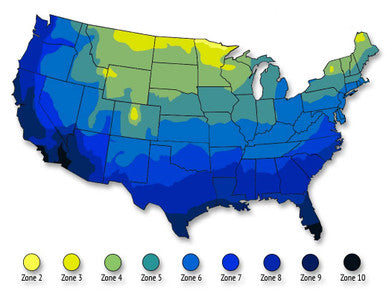
Zone Map


Proven Winners®
Salvia 'Back to the Fuchsia'
Description
Salvia 'Back to the Fuchsia' | COLOR SPIRES® Collection | PP32920
Proven Winners® Award-Winning Perennial | 2022 Top Performer | Zones 3-8
BEST VALUE: 1 Gallon Premium Container
Larger root system, faster establishment, more blooms first season — the premier size for this variety
FILL MY BOX & SAVE 15%
Buy any 2 plants and automatically save 15% at checkout
Why 'Back to the Fuchsia' Salvia is Trending in 2026 Gardens
- Boldest fuchsia-pink in the entire COLOR SPIRES® collection — vivid spikes on dramatic dark charcoal stems stop traffic
- Pollinator crisis solution — irresistible to hummingbirds, butterflies, and bees from late spring through summer
- Reblooming perennial — deadhead or cut back for a second flush of color, extending the season significantly
- Fragrant foliage trend — aromatic leaves release a pleasant sage scent when brushed, adding sensory dimension
- Deer and rabbit resistant — scented foliage naturally deters browsing wildlife without sprays or fencing
- Compact powerhouse — 22-24" mounded habit fits borders, containers, and small-space gardens perfectly
- Cold-hardy performer — reliably perennial in zones 3-8, returning stronger each spring
What This Plant Does For You
- Transforms sunny borders into vibrant fuchsia-pink showcases that draw compliments from neighbors and pollinators alike
- Creates a hummingbird and butterfly magnet that brings your garden to life with constant wildlife activity
- Delivers two bloom seasons per year with proper deadheading — more color for less effort than most perennials
- Fills containers with bold, upright color that holds its shape without flopping or staking
- Returns reliably each spring, building into a larger, more floriferous clump year after year
- Protects your garden investment with natural deer resistance — no sprays, no fencing, no frustration
Plant Highlights
- Botanical Name: Salvia 'Back to the Fuchsia' PP32920 | COLOR SPIRES® Collection
- Brand: Proven Winners®
- Hardiness Zones: 3-8
- Premier Container Size: 1 Gallon
- Mature Height: 22-24"
- Mature Width: 22-24"
- Growth Rate: Moderate
- Habit: Neatly mounded, densely branched, compact, non-flopping
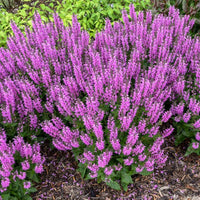
- Bloom Color: Vivid fuchsia-pink spikes on dark charcoal stems
- Bloom Season: Late spring through early summer; reblooms with deadheading
- Fragrance: Fragrant foliage and pleasantly scented flowers
- Foliage: Rich dark to medium green, aromatic
- Type: Hardy perennial
- Sun Requirements: Full sun (6-8 hours minimum for best blooms)
- Water Needs: Moderate; drought tolerant once established
- Soil Preference: Moist, well-drained; pH 5.5-7.5; adaptable to loam, sandy, or draining clay
- Pruning Needs: Deadhead for rebloom; cut back late fall or early spring
- Awards: 2022 Top Performer
- Grown by: The Plant Factory
Premium Features & Solutions
Unmatched Color Impact
'Back to the Fuchsia' delivers the deepest, brightest fuchsia-pink of the entire COLOR SPIRES® collection. The vivid spikes rise on dark charcoal stems that create dramatic contrast, making this one of the most visually striking perennials available. Plant in groups of 3-5 for a fuchsia river of color that commands attention from across the yard.
Pollinator Powerhouse
Hummingbirds, honey bees, butterflies, and beneficial insects are irresistibly drawn to the nectar-rich flower spikes. The extended bloom season and rebloom capability mean your garden supports pollinators from late spring well into summer — critical habitat during peak pollinator activity periods.
Natural Deer and Rabbit Resistance
The aromatic foliage that smells wonderful to humans is strongly disliked by deer and rabbits. No sprays, no fencing, no frustration. Plant with confidence in high-pressure areas where other perennials get browsed.
Reblooming Perennial Value
Unlike one-and-done perennials, 'Back to the Fuchsia' rewards deadheading with a significant second flush of blooms. Cut back spent flower spikes after the main late spring flush and watch fresh fuchsia color return later in the season. Two bloom seasons from one plant.
Compact, Non-Flopping Habit
The densely branched, mounded 22-24" habit stays tidy and upright without staking. Sturdy stems support the flower spikes through wind and rain. Perfect for front-of-border positions, containers, and mass plantings where a clean, structured look is essential.
Drought Tolerance Once Established
After the first growing season, 'Back to the Fuchsia' develops impressive drought tolerance. Deep roots access moisture during dry spells, reducing irrigation needs and making it ideal for low-water landscapes or busy gardeners who can't water constantly.
Cold Hardy Perennial Investment
Hardy to zone 3 (-40°F), this salvia returns reliably each spring, building into a larger, more floriferous clump year after year. Unlike annuals that must be replanted, your investment grows in value with each passing season.
Smart Growing Guide
For Beginner Gardeners — Step-by-Step Success:
Step 1: Choose the Right Spot
Select a location with full sun — at least 6-8 hours of direct sunlight daily. More sun equals more blooms and sturdier stems. Good drainage is essential; avoid spots where water pools after rain. 'Back to the Fuchsia' thrives in average garden soil and adapts to loam, sandy, or naturally draining clay.
Step 2: Prepare the Planting Hole
Dig a hole as deep as the root ball and about twice as wide, loosening soil around the edges. Backfill with native soil, optionally mixed with compost for improved structure. Set the plant so the top of the root ball is level with surrounding soil — never bury the crown.
Step 3: Plant and Space Correctly
Space plants 22-24 inches apart to allow for full, mounded growth and good air circulation. Firm soil gently around the root ball to eliminate air pockets, then water thoroughly after planting.
Step 4: Water Through Establishment
Keep soil evenly moist during the first growing season so the top 1-2 inches don't remain dry for long periods. Once established, allow the top couple of inches to dry between waterings. Avoid constantly soggy soil which can cause root rot.
Step 5: Mulch for Success
Apply a 1-2 inch layer of organic mulch (shredded bark, leaf mold, or compost) around the base, keeping it away from the stems and crown. Mulch conserves moisture, suppresses weeds, and moderates soil temperature.
Step 6: Deadhead for More Blooms
Snip or shear off spent flower spikes once they fade to promote a fresh flush of blooms. Regular deadheading through summer extends the bloom season and keeps the plant looking clean and vibrant.
Step 7: Cut Back for Rebloom
After the main flush of flowering in late spring/early summer, cut the entire clump back to just above newly emerging foliage. This stronger cut triggers a significant rebloom later in the season.
Step 8: Annual Maintenance
In late fall or very early spring, cut back old dried stems to just above the crown to make way for fresh growth. Every 2-3 years, divide overcrowded clumps in early spring or early fall to maintain vigor and maximize flowering. Apply our SR-18-5-10 slow-release fertilizer in early spring for best results.
For Advanced Gardeners — Technical Details:
Salvia nemorosa 'Back to the Fuchsia' (PP32920) performs optimally in USDA zones 3-8 with full solar exposure (minimum 6-8 hours direct insolation). Partial sun is tolerated in hotter climates (zones 7-8) but flowering density is significantly reduced. Soil pH tolerance ranges 5.5-7.5; adaptable to loam, sandy, or naturally draining clay substrates. Good drainage is critical — avoid anaerobic soil conditions, particularly in winter, which can cause crown rot.
Compact, non-flopping habit results from dense branching architecture and sturdy stem internodes. Mature clump dimensions of 22-24" height and spread are consistent across growing zones. Aromatic foliage contains volatile oils that deter deer and rabbit browsing — a reliable resistance mechanism that does not diminish over time.
Flowering occurs on current season's growth. Primary bloom flush in late spring/early summer (May-June in most zones). Deadheading spent spikes at the base promotes secondary bloom initiation. For maximum rebloom, cut the entire clump back by one-third to one-half after the primary flush — new growth emerges within 2-3 weeks and secondary bloom follows in 4-6 weeks. Secondary blooms may be slightly smaller but are still highly ornamental.
Nutrient requirements are light to moderate. Avoid over-fertilizing with high-nitrogen formulations which promote vegetative growth at the expense of floral development and can cause floppy stems. Apply balanced slow-release fertilizer (18-5-10 NPK or similar) in early spring. Annual top-dressing with compost supports long-term soil health and plant vigor.
Division every 2-3 years in early spring or early fall maintains clump vigor and maximizes flowering. Lift and divide with a sharp spade, replanting divisions at the same depth. Divisions establish quickly and bloom the same season when divided in spring.
Pest and disease pressure minimal. Excellent resistance to common perennial pests. Powdery mildew may occur in humid, poorly ventilated sites — ensure adequate air circulation and avoid overhead irrigation. No significant disease issues under normal growing conditions.
Cultivar is patented (PP32920, CPBRAF) — unauthorized propagation prohibited.
Pro Tips for Maximum Impact
- Mass Planting Magic: Group 3-5 plants together for a dramatic fuchsia river of color — the visual impact multiplies exponentially with mass plantings
- Companion Planting: Pair with silver foliage plants (artemisia, lamb's ear), soft ornamental grasses, or white and purple perennials to make the fuchsia spikes pop with maximum contrast
- Container Thriller: Use as the upright thriller in mixed sun containers — pair with trailing calibrachoa or sweet potato vine for a complete designer look
- Hummingbird Strategy: Plant near outdoor seating areas where you can enjoy the hummingbird activity up close — they'll visit repeatedly throughout the day
- Rebloom Timing: Cut back immediately after the primary bloom flush fades (don't wait) for the fastest rebloom turnaround — typically 4-6 weeks to second flowering
- Division Bonus: Divide every 2-3 years in spring to multiply your plants for free — each division blooms the same season
- Fragrance Placement: Plant near walkways, patios, or garden seating where brushing against the foliage releases the pleasant aromatic scent
- Cut Flower Use: Harvest spikes in early morning at peak color for fresh arrangements — they last well in water and add dramatic vertical interest to bouquets
- Fertilizer Timing: Apply SR-18-5-10 in early spring as new growth emerges. Avoid late-season fertilizing which promotes tender growth vulnerable to winter damage
- 1-Gallon Advantage: The premier 1-gallon container size establishes significantly faster than smaller sizes, often blooming heavily the first season with proper care
Frequently Asked Questions
Q: Why is the 1-gallon size the best choice for this salvia?
A: The 1-gallon premium container provides a substantially larger, more developed root system than smaller sizes. This means faster establishment, better drought tolerance, and superior first-season bloom production. The 1-gallon size is the premier choice for gardeners who want maximum performance from day one.
Q: Will my plant bloom the first year?
A: Yes! The 1-gallon size typically blooms the first season after planting. Spring-planted salvias usually begin flowering in late spring/early summer and can rebloom if deadheaded promptly.
Q: How do I get it to rebloom?
A: Two approaches work well. For continuous color, deadhead spent spikes regularly as they fade. For a bigger second flush, cut the entire clump back by one-third to one-half after the primary bloom period — new growth and reblooming follow within 4-6 weeks.
Q: Is this truly deer resistant?
A: Yes. The aromatic foliage is strongly disliked by deer and rabbits. The scented oils that make the foliage smell pleasant to humans are a reliable natural deterrent to browsing wildlife.
Q: Can I grow this in a container?
A: Absolutely. 'Back to the Fuchsia' makes an excellent container plant. Use a well-drained all-purpose potting mix in a container with drainage holes. Container plants dry out faster than in-ground plants, so monitor moisture closely in warm weather.
Q: How cold hardy is this plant?
A: Hardy to zone 3 (-40°F). This is one of the most cold-tolerant salvias available. It returns reliably each spring even in harsh northern climates, building into a larger clump with each passing year.
Q: How far apart should I space plants?
A: Space 22-24 inches apart — matching the mature spread — for good air circulation and full, mounded growth. For mass plantings, this spacing creates a solid carpet of color at maturity.
Q: Does it need a lot of fertilizer?
A: No. 'Back to the Fuchsia' is not a heavy feeder. Apply our SR-18-5-10 slow-release fertilizer in early spring for best results. Avoid high-nitrogen fertilizers which promote foliage over flowers and can cause floppy stems.
Q: When should I cut it back in fall?
A: Cut back old dried stems in late fall after frost or in very early spring before new growth emerges. Either timing works — some gardeners leave the stems through winter for wildlife habitat and winter interest, then cut back in early spring.
Q: Is this plant fragrant?
A: Yes — both the foliage and flowers are fragrant. The aromatic foliage releases a pleasant sage-like scent when brushed or crushed. The flowers have a light, pleasant fragrance as well. Plant near walkways or seating areas to enjoy the scent.
Take Action Now
Proven Winners® perennials in premium 1-gallon containers sell out quickly during spring planting season. 'Back to the Fuchsia' is a 2022 Top Performer that delivers season after season. Order today to secure your plants and get them in the ground at the optimal spring planting time.
Ordering & Shipping Information
Processing Time: Orders are typically processed within 1-3 business days. Orders placed after 4:00 PM Wednesday through Sunday ship the following Monday.
Shipping Protection: Plant Factory Direct uses premium shipping processes to ensure your plants arrive healthy and ready to thrive. We monitor weather conditions and may temporarily hold shipments during temperature extremes (below 34°F or above 95°F) to protect plant viability.
Seasonal Expectations: Plant size and appearance vary by season. Spring plants may be smaller and trimmed for optimal transplant success. Blooms are often removed before shipping as they don't travel well. All plants are hand-selected for vigorous root systems and future performance potential.
Care Recommendation: Fertilize in early spring with our SR-18-5-10 slow-release fertilizer for maximum growth and bloom production. Deadhead regularly to extend the bloom season and encourage reblooming.